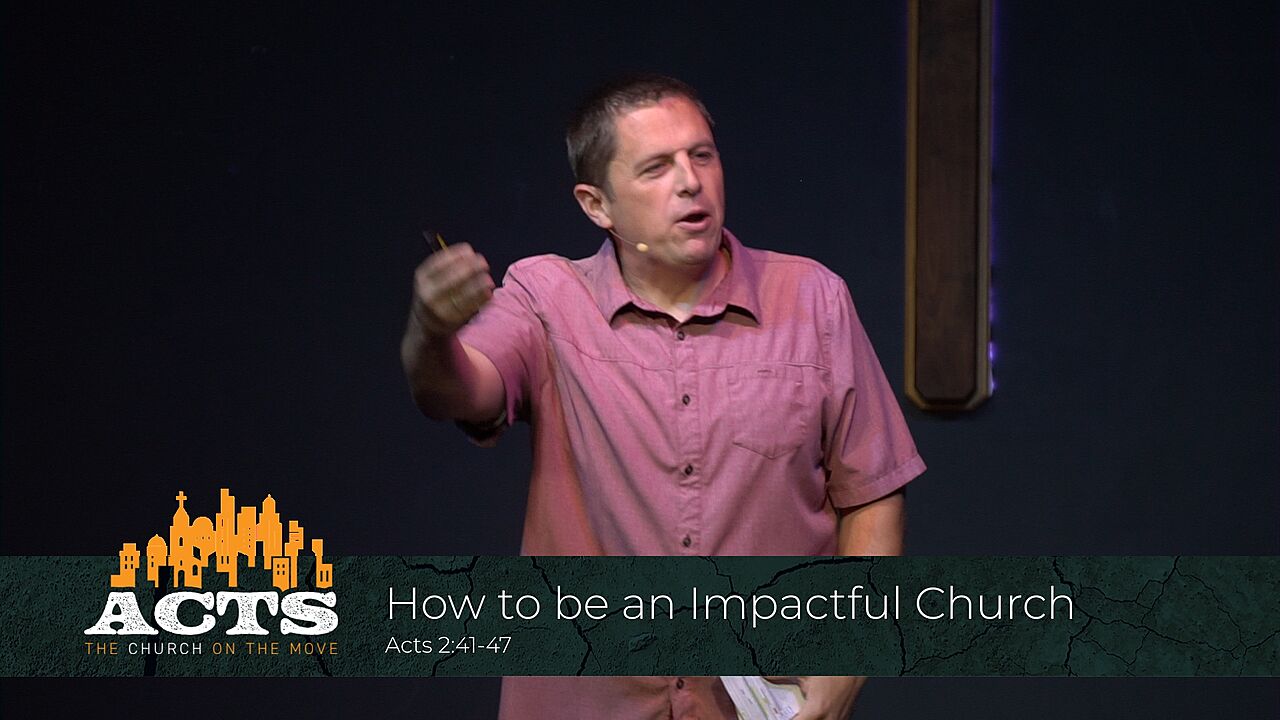
Acts 2:14-41 - The Rescue Mission

I'm going to invite you this morning to Acts. Chapter two is where we're going to be, Acts chapter two. And I, in light of you know, we're not well, we're in Acts chapter two, in a series together as a church. We're going through the book of Acts. But in light of recent events that have transpired, really across our country, from a young lady in Charlotte who lost her life, tragically, to shootings in Colorado, to the events that transpired at UVU this week. I imagined as a pastor, I'm thinking to myself, that's probably going to be a pretty full week in our church and maybe a little bit heavier in heart as God's people. And sometimes we come to moments like this asking all sorts of questions regarding circumstances. But I want to remind you, as we kick off today, in light of the tragic events that took place I want to remind you of some words that the Apostle Peter shared with us. And one of the reasons I want to do this is one, it's very timely in what Peter shares in First Peter chapter three. I want to look at for just a minute before we get to Acts chapter two. But the reason I want to focus on Peter is because in Acts chapter two, where we're going to be at together, Peter is preaching the first message representing the New Testament church. And so in light of that, as Peter is carrying himself through what I think would be a very difficult time Peter reminds us as God's people, I think of an important word, and that's this.
He says this do not repay evil for evil or reviling for reviling, but on the contrary, bless. For to this you were called, that you may obtain a blessing in the midst of the darkness and brokenness in this world. God has called us to be a particular type of people. But and can I just say, for all of us, tragedy does not determine a message that we share. It can amplify it, but it doesn't dictate it. Does that make sense? Like in fact really? Circumstances don't determine the message that we carry as God's people, whether we're on the top of the mountains or we're going through the valley, the message remains the same. Now, there are certain seasons in life that we might go through that really amplify the message that we share, or it might even turn hearts to be more open to listen to what God truly says. But Peter reminds us in this passage, the way that we're to carry ourselves as God's people, as we walk in this world. And no doubt, when Peter writes this particular letter, he's writing to a church that's facing persecution. And when you study Christianity for the first 250 years of Christianity, 125 of those years would cost you your life for following Jesus.
And so there was there was a certainly a price to pay because of their faith in Christ, but that didn't determine the message that they shared, right? It may have amplified it. In fact, I think it did. And there's early church leaders like Tertullian that said the blood of the martyrs was seed, and the way that God's people continued to give their lives for the sake of the gospel was like they thought that they couldn't be destroyed, couldn't be defeated, couldn't ultimately be killed. Which is true because of the message of the gospel. We know our best days are always in front of us because of Jesus. Anytime a believer loses their life like those that are left behind, we think, man, this is tragic for us. But can I tell you when that person passes away in Christ, that is the best day of their life because of the hope that we have in Christ. It doesn't take away from the pain of the moment, but when you think about who God calls me to be in circumstances it's to represent the beauty of the gospel. And this is, this is what Peter is encouraging us to do. In fact, there's a thought that biblical counsels will carry, which they refer to as the crazy cycle. And the encouragement is to not have the crazy cycle in your life. We don't want to go through the crazy cycle, but the way it works as people, it tends to go like this, that if something happens to you that makes you feel unloved, then you feel the pain of that and the pain of that.
You respond. You react because of it, right? And so when someone's unloving to you, it hurts you. And the and the typical cliche in our culture. Hurt people. Hurt people. Right? Like when you feel hurt, then you respond in that hurt. And then the way that you respond, guess what? It impacts other people and you know how they react to that. Well, they react hurt. Right? And so it goes back and forth. Someone unloving to you. Well then you're unloving back to them. And then and then because you've been unloving to them while they're unloving, back to you and round and round. The crazy cycle goes until someone in humility is willing to lay their lives down for the benefit of another. And in so doing, that's where true healing begins to take place. It doesn't mean that you can't find justice. I think that justice is different than what we're talking about in terms in terms of just responding evil to evil. Like, I think there's laws in your country for a reason, right? In our country, we can obey those laws or we can seek justice. And those things are they have a place and they are important, but they understand who God has called us to be as his people.
I mean, if you think in terms of another passage like this, Romans chapter 12, verse seven, it tells you this abhor what is evil. Right. It's okay to hate things that are evil. And so abhor what's evil. And then it tells you in verse 17 of Romans chapter 12, don't repay evil for evil. But in verse 19, vengeance is mine. I will repay, saith the Lord. So as God's people, it reminds us, maybe I could I could throw in Ephesians chapter six, where it tells us we wrestle not against flesh and blood, but against principalities and powers. Meaning people aren't ultimately the enemy, but rather we're called to recognize there's a true enemy at work that's destroying the hearts of people. And that's the devil. It's principalities and powers making itself known in this world that brings darkness. But thank God that God didn't abandon us here, that he's given us an opportunity to respond in power because of what he's done. And this is exactly what we're going to see in Peter's message to us this morning. And second Peter, chapter two, verse 14 of the book of Acts. He preaches a message. It goes all the way to verse 41. I just want us to look at the way that Peter conducts himself and exactly what Peter shares in the midst of this broken culture, knowing exactly what they have just gone through together.
I mean, they just saw Jesus crucified in the most horrific of ways they had. They had such incredible hope in what they thought this Messiah would be, right? They had spent three years of their lives. They had pursued Christ with everything they'd given their lives, thinking, this is it. He's the one he's going to conquer. He's going to rule. And then they saw his demise and such terrible situation. And then after this, we read in chapter one of Acts that they see the resurrection of Christ, no doubt. And Jesus walks this earth for 40 days, and he's preaching to his disciples what he wants them to do. He gives us the theme of the book of Acts, right? Acts chapter one, verse eight. You'll, you shall be witnesses to me in Jerusalem, Judea, Samaria, to the uttermost parts of the earth like God has called them on a rescue mission. He says to them, okay, as now you've seen me resurrected. Now that I live, you know that you'll live too. That really the force that God has created in this church is unstoppable. And so what God wants to do in you, he wants to work through you to see the healing hand of the of the Lord known throughout this world. And you get to be that messenger in the midst of darkness. It doesn't lead us to cower as God's people, but it gives us a place to stand in boldness, to know that no matter what the world might threaten me, you cannot truly rob me of what I have in Jesus.
And so the Peter in the midst of this is where he delivers this message for us. And I want you to know that even still, seeing the resurrection of Christ, knowing there's victory in that Peter's heart could have carried bitterness. It could have it could have carried anger. It could have been very maligning, aggressive, attacking. But regardless, he knows what ultimately is going to change the world. Get this. It's not politics. It's not more even religion. It's a heart truly surrendered to Christ. And the catalyst for representing that in this world are God's people finding their identity truly rooted and surrendered to Christ, and then living that gospel light in this world. Which is why this morning we're talking about the rescue mission of Peter. And he starts it like this. He says, but Peter, standing with the 11, lifted up his voice and addressed, you see this unified front of the disciples. Remember, they ran away as cowards at Jesus's crucifixion, but here they come back with an incredible force, an incredible force to be reckoned with. And he goes on and says, Men of Judea and all who dwell in Jerusalem, let this be known to you, and give ear to my words.
For these people are not drunk as you suppose, since it is only the third hour of the day. I feel like this type of thought can really just take us off course here for a minute. We're going to all of a sudden talk about drunkenness. But if you're here last week, we talked about the first 13 verses of chapter two, which Peter was dealing with this. Right. And when the early group of disciples that are preaching this message, remember, we're in Jerusalem and they have just gone through the Passover 50 days previous, and there's a giant celebration. And then because of that, everyone's seeing the crucifixion of Jesus. And now, 50 days later, they're at Pentecost, and all the Jewish people are traveling to Jerusalem to celebrate Pentecost. And now they're hearing Peter preach this message, and he's preaching with incredible boldness. Right. They're seeing the disciples go out in the world, and they're sharing the message of Jesus, and they're doing it with incredibly incredible boldness. And when they're when the people are trying to wrestle in their mind like, well, how is this possible? They're thinking in their mind. They've got to be they've got to be drunk, like and I said to you last week and I'll just remind you that when he's talking about being drunk, I don't think they're saying, look, these people are out of their mind.
Nuts. We can't even understand them. I think the church in this moment has more clarity than they've ever had in the three previous years of following Jesus. And the reason for that is everything Jesus has taught them is finally, it all makes sense. I mean, for three years they kind of followed Jesus, somewhat clouded in mystery. They didn't. They didn't fully grasp exactly what Jesus was saying. But now, in the resurrection of Christ, it's all coming together. So they have more clarity than they've ever had. So they're not accusing them of being drunk because, well, we don't understand these people. I think they're accusing of being drunk because they're coming at the world with such incredible boldness for what they've experienced in Christ, and they want everyone to have it. And there's so much passion and joy in their life, even at the threat of Rome. And these people are aware, like we know what happened to Jesus. And here you are out in public again declaring this to the world. Are you not concerned with what's going to happen to your life? And here's their answer. No, we're absolutely not. And the reason we're not is because we know how secure we are and what Jesus has done. And so more than just for us, we're like concerned for you and what you can discover because of who Christ is. And so I would say it's the same for us.
Like in all of our lives this morning, we will never discover the purpose for which we were created until our lives are surrendered to him. And so they're sharing this rescue mission. And let me let me give you point number one then in your notes. And actually I'm going to give you the next three points. We're going to read some verses together because I gotta save some time today. But number one is this there is no Switzerland in eternity. There is no Switzerland in eternity. And you can I'm sure you can spell that correctly. Switzerland, right. But. And let me, let me just be careful in what I say about about Switzerland for a minute. Because I looked this up today. I'm like, how many, how many Swiss live in Utah? And we're right. We're like, 1% of our population is Swiss. So I want you to know, in saying there is no Switzerland in eternity, I'm not telling you like all Switzerland people are going to hell. That's not what. That's not what I'm saying. Like Switzerland, people, you can be redeemed. Swiss people. You can be redeemed. Every. Every tribe, tongue and language can be redeemed. We already know the only Unredeemable people are either Lakers fans or Raiders fans. That's it. Other than that, everyone else. Everyone else can come to know Jesus, right? So. So when it comes to the idea of why I'm picking on Switzerland, so we know is we historically recognize Swiss just they always play the neutral position.
Right. We're indifferent. That's kind of where they are. But when it comes to the position in Jesus that Jesus didn't give us that place. Right. And in fact, the cross of Christ should scream that to us. I mean, what Jesus did mattered so much that he was willing to give his life for it. If all Jesus was wanting to do was to present to you another good idea or religious way of living. Like he could have just showed up, taught that message. But he knew his identity was polarizing to the point it was going to lead to his crucifixion and in fact, that crucifixion was necessary for you and for me. So to just be indifferent to what Jesus has done is not healthy for the soul, and you don't find true life in it. In fact, when C.S. Lewis wrote the book Mere Christianity, he wrote and really he included this major idea. He said, when it comes to people, we have this tendency to just want to look at Jesus and say, well, he was a great moral teacher, and certainly Jesus taught some great things. But he argues in that book that Jesus didn't leave that place for us to label him that way. In fact, he makes this argument if you really look at Jesus, he really gave us only three places to think about him.
Either he was a lunatic out of his mind, he was the devil of hell himself, or he was exactly who he says he is Lord and Savior of your life. Those are the only options Jesus truly gives for you. The idea of a of a moral, moral, just good teacher. It says if anyone holds a position like that, you have never looked at the truth of what Jesus, what the Bible says about Jesus and what's proclaimed about him, right? Jesus didn't leave that position. The reason for that is he. There is no neutral spot in Christ. And in fact, this is where Peter begins his message. He really wants us to awaken us to that idea of the significance of what this moment represents for you and for me, that Jesus would give his life for you. I mean, that should scream at us the urgency of our need to embrace him. And so first, Peter or excuse me, Peter says it like this in Acts chapter two. He says, verse 16, but this is what was uttered through the prophet Joel. And in the last days it shall be. God shall be. God declares that I will pour out my spirit on all flesh, and your sons and your daughters shall prophesy, and your young men shall see visions, and your old men shall dream dreams, even on my male servants and female servants.
In those days I will pour out my spirit, and they shall prophesy. Let me. I want to explain this, but let me give you the next two notes or points as I get ready to explain this letter A under number one is this you can embrace God's grace, or number two, you can embrace God's judgment. You can embrace God's grace, or you can embrace God's judgment. There's no neutral ground. And Peter's beginning his message by saying this to us, and he and he goes back to Joel chapter two to help us see the significance of this moment. Now, we talked a little bit about Joel chapter two last week. So I don't want to elaborate in the ways that we talked about it. But I do want you to recognize what Peter is saying here when he's quoting from Joel chapter two. He's quoting verse 28 and 29. And what Peter is saying here to the Jewish mind, would have been a very scandalous thought for them to even consider, because in the Jewish mentality in the Old Testament, if you wanted to get near to God, you were dependent upon someone to be your representative between you and God. And in some cases, it could be a prophet who was God's mouthpiece to you. In other cases, it would be the priest who was your mouthpiece to God, but it always required for you to have someone to be that representative between you and the Lord.
In fact, if you went to the temple to worship, you couldn't even go into the temple. That was only a place that a priest could go. And that priest had to be a male, and that priest had to be of the tribe of Levi. It was a very exclusive. But then all of a sudden, the prophet Joel, Joel is prophesying about a time and a place where we're no longer dependent on someone else to represent us before the Lord, but rather we have the intimacy of that relationship in the here and now. I mean, that is God's grace being poured out for us. In fact, the way that Joel says it, when some people read this passage, they really fixate, especially in our American mentality on the idea of dreams and visions. Can't wait for dreams and visions. And they and we kind of look forward to something like that. But I want you to know, in a passage like Joel chapter two, he's not highlighting the thought of fixating on dreams and visions, rather from a from a broad perspective. This is what he's saying. He's saying, look, ladies, ladies will be connected to the Lord. It says, I'll pour out my spirit on all flesh, and your sons and daughters shall prophesy. It's no longer this exclusive structure to just males and particularly to Levites.
But it's saying women, you get a direct relationship with the Lord. And in addition to that, he also talks about servants, which are slaves. He's saying it doesn't matter your gender, it doesn't matter your class because of what Jesus has done. We all get this relationship with the Lord. If we would embrace what Christ has accomplished for us on the cross. This is what Peter's saying. It's the grace of God, not not neutrality. It's the grace of God embracing your life, and you will not discover the purpose for which you exist until your life is given to the one that created it for his purposes. You didn't make you and in the opposite of that, then he says in verse 19, I will show wonders in the heavens above, and signs on the earth below, blood and fire and vapor of smoke the sun will be turned into darkness and the moon to blood. Before the day of the Lord comes the great and magnificent day. And it shall come to pass that everyone who calls upon the name of the Lord will be saved. So that's the great call at the end of what he wants us to recognize in him that true transformation in this world only happens by giving our lives to the one who is greater, defining our identity in him to that place of surrender. This is what he's calling us to.
So he's recognizing the idea of grace. And then in verse 19 and 20, he's talking about the thought of judgment. And I want you to know, in terms of this verse, like sometimes people get Uber fixated on aspects of this verse that can become unhealthy. Like every time there is, I'll just go ahead and tell you this. Like every time there is a blood moon, please know I don't need an email, okay? I don't need a text. I don't need an email. Just there are some people that get so focused on, they're like, oh, let's hunker down. We're going to die. Like, they get really fixated on the idea of some of the symbolic thought to this. Right. And it's like, let's build a bunker and it's done right. That's kind of how it goes. But can I tell you, as God's people like that should not worry us because we know how the story ends, right? But rather can I can I tell you just a broader picture of what he's saying here? And when you read throughout the Old and New Testament, one of the things that you discover is it says to you, for example, in Psalm 19, the heavens declare the glory of God. So you look at all of God's creation, especially to the stars, and you just see the handiwork of the Lord, and it just makes you thankful, right? Like you go to the Grand Canyon, you stand on the precipice of the Grand Canyon.
Nobody goes there to think about how great they are. You go there to be captivated by the glory of creation and your creator who made it all. And the Jewish people, they thought so much about this that when they describe the heavens, they often reflected on the stars as being the representation of the angels. In fact, you can find passages throughout the Bible where the stars and angels are almost synonymous, even in the New Testament. Like you turn to revelation chapter one, verse 20. It refers to the to the stars of the seven churches, which it says are the angels. Or in revelation chapter 12, when the great dragon swept his tail across the sky. It says, and a third of the angelic hosts fell, which was relating them to a third of the stars. The angels. Right. And so there is this thought toward the angelic presence being represented as the stars, the heavens. And so what it's saying is, when God brings his judgment, the foundation of all of creation, both heaven and earth, will shake in his presence. Alright. So the idea of the stars and the sun and all this coming to darkness is just showing, showing to you the authority and power of who this God is. There is no neutral position. It's the grace of God made known in Christ, or the judgment of God made known on us, because we refuse to embrace the forgiveness that Christ comes to bring.
There is no neutral position. And Peter is sharing this with us so that people would have the opportunity to see the beauty of Jesus. So that gets me to point number two, which is this understand the case for Jesus. Understand the case for Jesus. And as Peter is sharing this message, he really starts to build this for you to get to the climactic point of proclaiming who Christ is. As you get to verse 32 and on. But he starts off with this. This is letter A under point number two. He's historically proven. He just he just says, Consider Jesus from that historical basis. He says, Men of Israel hear these words. Jesus of Nazareth, a man attested to you by God with mighty works and wonders and signs that God did through him in your midst. As you yourselves know this Jesus delivered up according to the definitive plan and foreknowledge of God, you crucified and killed by the hands of lawless men. God raised him up, losing the pains, losing the pains of death because it was not possible for him to be held by it. So he's just saying, just consider historically, what we know has taken place with Jesus, with his death, burial, and resurrection. And when Peter is writing this, no doubt this is a painful moment for Peter, because he talks about in verse 23, at the very end of verse 23, you crucified and killed by the hands of lawless men.
When Peter is projecting this message, he's when he's doing this at Pentecost. This is a very a time where the city is just jam packed, and the very people that were responsible for bringing Jesus to the place that led to his crucifixion, those leaders during that time period, they're walking about freely in the streets, and no doubt they may even be passing by as Peter is preaching this message. And so Peter is seeing the very ones that are responsible for the killing of Jesus leading to his crucifixion. And so you look at this for Peter as he's sharing this message, how difficult of a moment it might have been to just stand up in the midst of darkness, but and proclaim the beauty of Christ, and to not let his heart be overtaken by bitterness or anger, but the freedom that only Jesus can bring. And it's the same for us, right? When we go through difficult things, sometimes the initial thought that wells within our soul, if we just let that out, it's not healthy or healing doesn't mean it can't be dealt with. Doesn't mean we shouldn't weep. It doesn't. It doesn't mean that we can't acknowledge when things are hard.
But what brings healing is not the crazy cycle. What brings healing is Christ. And so in the midst of that, I think the reason that Peter was able to move forward as light in the midst of darkness is actually found in the in the beginning of verse 23 where he raps this message up for us. He says Jesus delivered up according to the definite plan and foreknowledge of God. Here's what he's saying is none of this darkness took God by surprise. He knew it all. Now, it doesn't mean that God wanted hearts to be wicked. It doesn't mean that God forced hearts to be wicked, but it does mean in the midst of wickedness, the greater light of Christ is known, and Jesus was always ultimately in control. I mean, even when you think about it historically and what the cross represents to the church, right? The darkest day in all of history, Jesus crucified becomes the emblem of our celebration because it reminds us of the greater hope that Jesus overcame it all sin, Satan, and death. Which is why we as God's people, we carry the cross because it reminds us that in the darkest day of history, as God can turn that as the anthem for celebration, as God's people. Imagine what he can do in your life. Imagine when a life is surrendered to him completely, how God brings that healing that even in my life, in the dark things that we might walk through, that none of it is out of the sovereign hand of God, that all of it is in his control.
And we know how it's going to end. We know in his hands we're more than victorious, more than conquerors in Christ. So the circumstances of my day do not dictate who I am, but rather my hope in Jesus does. And so he wants us to root ourselves in the historical understanding of Christ. First, consider him in this way. And then point number two in your notes is to consider also the prophetically it's prophetically the blank is foretold, prophetically foretold. And he goes back and he and he quotes for us. He gives us a couple quotes that we're not going to look at all this in the sermon, but in this one particular quote, he goes back to Psalm chapter 16. He says it like this. He says, For David says concerning him, I saw the Lord always before me, for he is at the right hand that I may not be shaken. Therefore my heart was glad, and my tongue rejoices. My flesh also will dwell in hope. For you will not abandon my soul to Hades, or let your Holy One see corruption. And then in order to explain what he's quoting. So in Psalm 16, he goes on verse 29 and explains it to the audience. He says, brothers, I may say to you with confidence about the patriarch David, that he both he both died and was buried, and his tomb is with us to this day.
Being therefore a prophet and knowing that God had sworn with an oath to him that he would set one of his descendants on his throne, he foresaw and spoke about the resurrection of the Christ, that he was not abandoned to Hades, nor did his flesh see corruption. Let me say a couple of things about this. And in terms of Hades, we think of Hades a little bit different today than than even the English word Hades when it was first translated in Scripture and the way they thought about it in the Old Testament. But the idea of Hades we often think today means hell and it doesn't mean hell. The word Hades simply means a place for the dead. Now, some people could experience hell, some people could experience heaven, but Hades just simply means a place for the dead. And Peter, in this moment, he's quoting from Psalm 16. The reason he's doing this is because David wrote about half of the Psalms that you read in the book of Psalms. And when David wrote the Psalms, Jewish people would often see that as a messianic foreshadowing of the true Messiah who would ultimately come. Meaning David was a representative of Jesus, and he's going back to Psalm 16. He's saying, remember when David quoted and said he would never see decay? He explains and says, well, David saw decay.
We know where his tomb is today. But rather what David was doing was prophetically declaring to us who the true king would be, who the true Messiah would be, and his body would not see decay. And he's reminding us, then, of what Jesus has accomplished in his resurrection, that the true King and the true Messiah is here. And in fact, by highlighting this, Peter is not only saying, and you have this one verse in the Bible, Peter is saying, really, just consider all the prophetic statements about the Messiah. It is powerful. I mean, there's nothing in all, of, all of religion that can compare to this, the way that Jesus has spoken about through Scripture and what he's going to fulfill for you and for me. From Genesis to Zechariah. I mean, you think about the prophecies that Jesus gives to us, about his coming from the writing of a donkey in Zechariah to Genesis chapter three, verse 15. It tells you about the coming of the Messiah, how he would crush the head of the serpent and would suffer a heel wound in return, that he would be born from the seed of a woman, the virgin birth. I mean the very first book of the Bible. Within the first few chapters you have the promise of a deliverer because of sin.
It is profoundly incredible. And what Jesus has accomplished for us. And Peter is saying, look, consider historically, consider it prophetically. I mean, consider, however, you need to consider it to think about the magnitude of being able to connect to God in a relationship, that you could find freedom in him and the purpose for which you were created in him, and live life for something greater than anything this world could have to offer. To know that no matter what happens in this world, what you have in Jesus endures forever. So that we could get to number three. Decide how you will respond. Decide how you will respond. Verse 36. And just give us for a moment how Peter begins. This next section ends verse 32 to verse 36 carries a similar thought, and he really encapsulates it in verse 36. And for time's sake, I just want you to see how he encapsulates. He says it like this let all the house of Israel therefore know for certain that God has made him both Lord and Christ, that Jesus whom you crucified. In case we didn't know, this, Christ is not his name. It's his title. Jesus Christ is the saving anointed one. It's a representation of really what Jesus accomplishes for us. And he gives us these two titles for Jesus, both Lord and Christ, or the Anointed One, the messianic hope, the promised deliverer, this Lord in Christ for you and for me.
And it's significant to see Jesus as both. What does that mean for our lives in terms of rescue, in terms of the Christ? It's saying to us, look, no matter how much religion you want to pour on your life. No matter how much good you may do in this world, it's never going to take away the wrong things that you've done. And before a holy God, there's judgment in that. And so what you need is a rescue. And look, you're not your deliverer. A greater deliverer has come. One who stood in your place and lived a perfect life. That the idea of Christ is representative of that for us. That someone loved me and pursued me and gave his life for me. And the best thought is it was God that God would become flesh and offer his life that I could find freedom. That is this idea of this anointed one, this importance of seeing. And more than that, he's not just he's not just a Savior, he's also Lord. Meaning he begs the question, who sits on the throne of your life to determine how you live your life? Because you need to awaken to the fact that you didn't make you so. So therefore surrendering to you is if you are Lord of your life makes no sense in who you are, and you'll never discover the purpose for which you were created, until your life is given over the one who created you for him.
And so Lord and Savior is significant in recognizing the centrality of who Jesus is to your life, that you would be surrendered to him and not just in your own understanding, but to recognize that this world will never find true healing until their lives are surrendered in that way. And so when our lives become surrendered to Christ, then we become that mouthpiece, that catalyst for the movement of God happening in this world. That true transformation and healing can happen in the lives of people around us. Jesus is what changes hearts. It's not me putting my thumb on you to force you to do anything. It's you understanding the beauty of who Christ is and your life given over to him. Because no one has loved you the way that Christ has loved you. And so Paul is calling us to this understanding that he is both Lord and Christ. And he says this in verse 40, and with many other words, he bore witness and continued to exhort them, saying, save yourselves from the crooked generation to realize that the world is broken. So he paints this picture for us. What does that look like? Well, he describes it in verse 37. He says, now when they heard this, they were cut to the heart and said to Peter and to the rest of the apostles, what should we do to be saved? And they realized that they were they were a part of what was broken.
And that brokenness was in them. And what they needed more than anything was Christ in their life. And so Peter says it like this. He said, Peter said to them, repent and be baptized, every one of you in the name of Jesus Christ, for the forgiveness of your sins. And you will receive the gift of the Holy Spirit. For the promise is for you and for your children and for all who are far off. Everyone whom the Lord our God calls to himself. And with many other words, he bore witness and continued to exhort them, saying, save yourselves from the crooked generation. So those who receive him who were baptized, and they were added that day about 3000 souls. You know, when Peter's giving this message, he's saying, this is what it looks like. He gives four thoughts, right? Repent. Be baptized. Forgiveness of sins, be indwelt by the Holy Spirit. Receive the Holy Spirit. And can I tell you really, those are those are four different ways of looking at the thought of salvation. What does it mean to be saved in Jesus? It's like this. If someone said to you, do you remember your wedding? Do you remember the day you got married? And I could describe it in all sorts of ways. Like I said, yeah, I can remember when my bride walked down the aisle, I remember that.
Or I could say, yeah, I remember. I remember when the minister gave us our vows to recite to one another or I said, yeah, yeah, I remember, I remember when I signed, I signed the marriage document at the courthouse, to legalize that thing before the government or I remember, I remember the consummation of our marriage, like there's all kinds of things that you could describe to talk about that wedding day and what it represented. But it's all about the wedding day. And it's the same for what Peter's talking about in terms of salvation. He's what he's describing is it is this place of repentance, this place of realizing in all the ways you could find your hope in this world, you finally surrender and say, but you, Jesus, it's you. God, forgive me. As Peter says here of my sins, God, fill me with your presence. God, give me new life in you. You know the idea of baptism here is this thought of immersion. When the early church, when they would come to know Jesus, they would immediately look for water to be baptized. Because baptism was this way of publicly proclaiming what they have received in Christ. It wasn't physical baptism that saves you, but it was a representation of that union of standing before people and saying, in a covenant relationship, I belong to Jesus. So this idea of repentance, this idea of baptism, this idea of forgiveness, even this coming of the Holy Spirit, the Spirit of God indwells the people of God.
The moment you trust in Jesus, the Bible promises you are indwelt by the Spirit of God. That is your seal for the day of redemption. It says in Ephesians chapter one. You belong to Jesus forever. Peter could have responded any way in his culture. He could have been filled with such bitterness and anger, hatred to what people did to Jesus and just ignored them. But he knew what would bring true hope to people and transformation in his culture. It wasn't more politics. It wasn't getting on social media and maligning people. Believe it or not, it's Christ alone. It's not until your hearts are given over to him that true transformation is found. It's important for us on a personal basis to discover that. It's important for us as a church to recognize that, to not lose sight of that. Circumstances do not change our message, but rather we can use those circumstances to amplify it. Because as God's people, we don't run away from darkness, but rather we're called to be a great light for Christ in the midst of darkness, because we know no matter what the circumstances bring in life, our lives can never be robbed of the hope that we have in Jesus. I'll close with this in 1944. June 6th.
In fact, 1944, one of the greatest moments in all of history, really, that determined the future of mankind was D-Day. One 150,000 troops from multiple different nations stormed the beaches of Normandy to bring liberation to Western Europe so that the Nazi regime would fall. And little less than a year later, it did. And you look at this day of history and you think, what brave, incredible individuals in the midst of darkness were willing to offer their lives up so that the rest of the world could be liberated into freedom. And we look at this as an important moment in history, and it certainly is. And at least in the last century, for sure, if not in all of history. But guys, can I just tell you not to take away from those brave men and women that did that? The message of Jesus is one that makes not only a difference in this world, but in what's to come. And I can't think of a greater hope for you to carry in lives of people around you than the beauty of what Christ means for you and for me. Because my hope for us as a church is for us, even gathered here this morning. If you don't know Jesus as that, our lives would be surrendered to that, but our lives would be so empowered by that no matter what life would bring to us, the grace of God would pour from us.