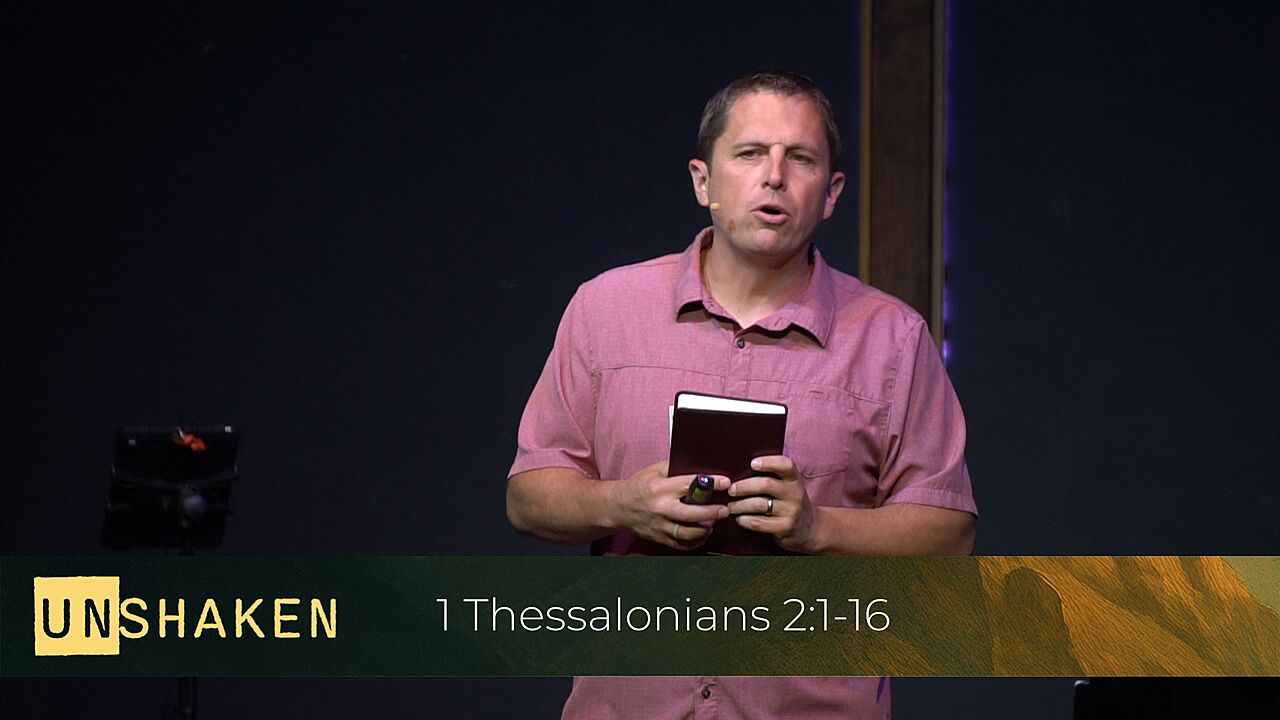
1 Thessalonians 1:1-10 - A Church That Inspires

Hey, I'm going to invite you this morning to First Thessalonians. First Thessalonians is where we're going to be at together today, and we're going to spend the last weeks of our summer, six weeks, in fact, together studying the book of First Thessalonians. And this is a very powerful book for us as a church. When I think about where we are and the impact we can make as a community for the Lord, as we look at the book of First Thessalonians and when you study the New Testament, First Thessalonians is one of the first books written in the New Testament. If you didn't know this, your Bible is not put together in chronological order. It's put together based on literary genre. And so right after the book of Acts, you have what's referred to as the epistles of the Bible. And there's even a portion of the Apostle Paul's epistles are chunked together as just Paul's epistles. But the Book of First Thessalonians is one of the first books written in the New Testament. In fact, it works like this on a timeline. The Book of James is thought to be the first book written in the New Testament. It's the proverbial book of the New Testament, the Book of Wisdom for the New Testament, and then the second book of the New Testament. There's a little bit of debate as to which came first. Some think it was the book of Galatians, some think it was the book of Thessalonians.
I tend to lean towards the book of Galatians, but Thessalonians is either second or third in chronological order of books that are written for us to begin to understand what it means to live our life in the light of Jesus. And this church is an incredible model for understanding what it means to know Christ and make an impact as a community in the Lord. First Thessalonians is a is a powerful book in that regard, teaching us how to how to be a church that inspires us. What we're going to talk about today, a church that inspires. And I want to just open up this book by being a little bit of a teacher for us, more than more than a preacher, because I want you to understand how this book took shape, what led to this book being written, and what was the response of this early church in the community when you study the book of First Thessalonians? I think it's important to understand it in terms of a timeline, because this book was written by the Apostle Paul, and I know on the screen is a map that the writing is very little for, very small for you. So I want to share with you some of the some of the important things to understand about this letter as it starts to take shape in terms of historically what's taken place in the backdrop of this, the Apostle Paul writes this letter if you ever read the book of Acts, his conversion takes place.
And in Acts chapter nine and it was it follows the persecution that took place in the early church, in Acts chapter seven and chapter eight. If you if you remember, Stephen was the first martyr that we read about in the in the New Testament. And one of the guys that signed off on the martyrdom of Stephen was a man that we know as Saul, who later became the Apostle Paul. And in Acts chapter eight he starts persecuting the early church. It's where he goes through an incredible conversion. And in chapter nine he comes to know the Lord. And this is all taking place there in the bottom right of your map, in the area of Jerusalem where the Apostle Paul is doing all this, he comes to know Jesus. And then in this conversion, no one really wanted to get near the Apostle Paul. Nobody want to touch this guy with a ten foot pole because he persecuted the church. He led to the martyrdom of Stephen. No one trusted this guy. I mean, they might think it was great that he claims that he knows Jesus now, but someone else can run that risk. And there was this individual by the name of Barnabas who was known as an encourager. Acts chapter four, verse 36 says, Barnabas was an encourager. And so he's the one that takes the risk to get the apostle Paul and put him under his wing and just see what God wants to do in his life.
And, I think we all need a Barnabas in our lives, someone that encourages us and we all need to be a Barnabas to someone else. When you think about what it means to be an encourager, it's speaking words of courage into the life of another. And this is what Barnabas did. He took the Apostle Paul. And he goes up to this region known as Antioch. And there he ministers with the Apostle Paul for about a decade. And during that time they discover that God's word, God's gospel is having a powerful impact, not just among the Jewish people who receive it, but also into the Gentile world. And as you read the book of Acts, this is what you discover that God's word first goes to the Jews, and then it goes to the Samaritans. And from the Samaritans it starts to make a difference in the life of the Gentiles. And this is why Barnabas comes and gets Paul and takes him to Antioch. And they minister in this area where there's Gentiles to teach them about the Lord. And after ten years of ministry in Antioch, the church fills the burden and the need by the movement of the Spirit of God among them, to go out to the rest of the known world and continue to preach the gospel, that others may know the Lord too.
And so Paul and Barnabas set out on what's called the first missionary journey in the book of Acts. You can find it in Acts chapter 13. And in that book they first go to the island of Cyprus. They leave from Antioch and they go to Cyprus. And the reason they picked Cyprus as the first location is because this is where Barnabas was from. And so they first go to preach the gospel to Barnabas homeland. And then from Cyprus they come up to this area and Iconium, Lystra and Darby before they come back to Antioch. And they share with everyone what they discover how the gospel is powerful and it's taken root, and all these different areas of the world and making a difference. And so then they decide in Acts chapter 15, at the very end of the chapter that they need to go on another missionary journey. And that's what you see outlined here on the screen is the second missionary journey. The book of Acts has three missionary journeys that the Apostle Paul went on, and some say he did even more after the book of Acts concludes. But Acts writes for his three missionary journeys. And on the screen is that second journey they went through. And I love that the illustration of the second journey is much bigger than the first journey, and I think our faith is a lot like that.
When we come to know the Lord. We start to put ourselves out there to serve him. And at first we may not be incredibly confident and have been able to exercise our abilities in serving him. And so we might start off with a little journey first to kind of test the waters. And I think that's what the apostle Paul and Barnabas did. And going to Cyprus, Iconium, Leicester, Derby, before coming back to Antioch. And then when they go on their second missionary journey, they expanded even further. But something is interesting when Paul and Barnabas won their first missionary journey, they took with him a man by the name of John Mark and John John Mark, when he went on that first missionary journey. After they got to the island of Cyprus, he quit and he went home. And on the second missionary journey. Now Barnabas, who is an encourager, wants to try again to take John Mark with him. And the Apostle Paul at the end of Acts 15 is adamant that they do not. And Paul was depending on John Mark and John. Mark abandoned them and so he didn't want that disappointment again, so he refused. And so Barnabas decides being an encourager and seeing the best out of everyone, he decides, you know what? I want to take John. Mark with me. Paul, you can go on a missionary journey as well, but take someone else with you.
And so Paul takes a man by the name of Silas with him. And you see, as the book of first Thessalonians is written, Paul starts with Paul and Silvanus, which is the Latin word for the name Silas. And so Paul takes Silas with him, and they go on their the second missionary journey. But rather than go down to Cyprus, they travel by land. And Paul goes back to the place where they had ended their last missionary journey, going through Darby, Lystra, and Iconium. And then when they get to Lystra, they meet a young man named Timothy. And you'll note that the book of Timothy in your New Testament is written to Timothy. But they meet a young man named Timothy, who was raised by a mother who was Jewish, a father who was Greek, and his mother taught him the scriptures. And Timothy came to know the Lord, and Timothy joins Paul and Silas on this missionary journey. And as Paul and Silas continue to travel, they come to this land known as Troas. And they receive a vision from the Lord that they're to go across the Aegean Sea to what is modern day Greece. And when they get to Greece, they end up by going to Greece. They go to the first. First thing they go to is known as Philippi, where you get the book of Philippians. And now they've entered into Europe, and for the first time, the gospel is now being preached in Europe.
And when you study the ancient history of Scripture, you find that the cradle of Christianity and Jewish religion comes from where Europe, Asia and Africa all unite in that location where they all come together. But here in this story we're about to read, as we're seeing how the early church spread from Asia into Europe. And Paul goes to the town of Philippi, and when he, Silas and Timothy are now in Philippi, they begin to receive persecution. The Apostle Paul had been persecuted up to this, but now in Philippi they get persecuted to the point that they get beat in public by the religious or the leaders of this day and thrown in jail. Now, the problem with this is that the Apostle Paul is a citizen of Rome. In Roman society during this time, and not everybody was a citizen. In fact, probably, I would say maybe even the majority of people were not actually Roman citizens in order to be a Roman citizen. Your relatives before you, your parents before you had to have been a citizen. And by birth you could be a Roman citizen. Or if you weren't fortunate to have Roman citizenship, you had to earn enough money to be able to pay for that citizenship. But either way, Paul had the privilege, along with Silas and Timothy, of being Roman citizens, which meant if anyone ever brought an accusation against them.
One of the privileges a citizen had was they were. They were to be given a fair trial. But when the Apostle Paul comes to Philippi and he begins to preach the gospel, a mob raises up, and they become angry with the apostle Paul, and they begin to persecute he and Silas. They beat them publicly, throw them in jail, and they never give them that trial. And then while Paul sits in jail, some leaders come to them and say, we're going to release you, but we want you to leave town. And Paul then reveals to them, well, I'm a Roman citizen. And the way that you treated me was unjust. And so he demands the leaders of that city come and walk him out of jail and out of the city. And I think the reason the Apostle Paul does this is that he knows based on what's happened to him now, he's got the leaders in this town in his back pocket, because they don't want that kind of accusation made against them that they treated a Roman citizen this way because they would have a justice or have criminal activity. They would have to pay for doing what they did. And this gave the Apostle Paul some freedom in the town of Philippi as they move forward. But in Philippi they met persecution and Apostle Paul, when he leaves, Philippi, then goes to the town of Thessalonica, which is down here.
Thessalonica was an important city for the Paul to do, for the Apostle Paul to do ministry, because this city was what's along, what's referred to as along the Ignatian way. And the Ignatian way was this major trade route that went from eastern Greece all the way to across Greece, into Italy, and ultimately stopped in Rome. This was a significant trade route. In fact, when you study the tactics of the Apostle Paul as he does ministry, his tendency was always to go to the major cities. And the reason he did that is he knew if the gospel could take root in the major cities, that it would have an impact in the countryside. And if he could win the city, he could win the region for the sake of Christ. To be made known. And so the city of Thessalonica was a very influential city. Some estimate that it was somewhere between 100,000 and 200,000 people that made up the city. And so the Apostle Paul travels to Thessalonica, and he and he begins to preach the gospel. And as he's preaching the gospel, it takes root and it has an impact. And this church has a significant impact. And can I say for us, the way Alpine Bible Church was planted is very much similar to the way the Apostle Paul did his ministry. In fact, looking at the Apostle Paul's ministry, I brought that tactic to Utah when we started the church.
You know, one of the things that I did when I first moved here is I started to meet with pastors of churches, churches that were in existence and thriving, and even churches that tried to start in towns and cities that weren't able to and ended up closing their doors. And I met with whoever I could to discover what. What is it that you think allowed your church to take root and thrive here? And then? And then for churches that closed. Why do you think that your church didn't take root here? What are some things that you would have done differently? And as I'm meeting with pastors and churches and trying to understand, what they were doing for the sake of the gospel here, we also did demographic studies throughout Utah, and we wanted to find the highest concentration of a population with the least gospel presence for the purpose of not only winning a city to the Lord, but seeing how this church could influence regions around us. And so if you're from Lehi, you know Jesus, we thank the Lord that you're from Lehi and you know Jesus. And we can make a difference here. And if you live in a town or city just beyond Lehi outside of this area, then we're thankful for that too, because we have opportunity to just influence all around us for the sake of the gospel. But as the Apostle Paul went to Thessalonica, what he discovered is the persecution continued to follow.
And in the midst of that persecution, the church was resilient. In fact, in First Thessalonians chapter two, verse two, Paul talks about the persecution he faced in Philippi and in first Thessalonians chapter one, verse six, and in verse chapter three, verse three, he talks about the persecution that the church experienced. Now, can I, can I just tell you, anytime we go through adversity or we see someone going through adversity, our knee jerk reaction is people. And maybe we could even say, if you have a tendency to be a helicopter parent is to try to get around your kid and shelter them from that adversity. But there's something we learn about the church in Thessalonica, especially the example that they set, that it was the persecution they experienced that actually drove them deeper in their relationship with Jesus, to find themselves resilient and unshaken for the cause of Christ. There's something special about what they had in the Lord. And so when you look at this church in verse six, look at this together. It says, and Paul says, and you became imitators of us and of the Lord. For you received the word in much affliction with the joy of the Holy Spirit. So you became an example to all the believers of Macedonia and Achaia. You know, this church is saying is really it becomes a model for us by imitating what the Apostle Paul imparted to them, they become a model for us and learning what it means to live for the Lord, even in adversity.
And one of the things that makes this church so incredible, when you study the life of the Apostle Paul here, is that when you when you read the book of Acts, chapter 17, this is when Paul's in Thessalonica, you discover that Paul, he likely was in Thessalonica for more than three weeks. Philippians four talks about him staying there for a little bit of time. He's likely sets up his tent making business to make a little income, to continue to fund the ministry that he's doing. But he preaches in Thessalonica for about three weeks straight. And when he starts to preach in Thessalonica, that's when the persecution breaks out. And Paul only spends three weeks in Thessalonica before he, Timothy and Silas have to flee. And when they flee, they leave from this region after three weeks of being there. And they go to Berea. And when they're in Berea, they face persecution again. And so in that persecution, the apostle Paul leaves Silas and Timothy in Berea, and he goes down to Athens, and he tells Timothy, as soon as you can come and meet me in Athens. And Timothy comes to Athens. And he says to Timothy, Timothy, I'm worried about the church in Thessalonica. I mean, we're only sharing God's word with him for three weeks.
Can you go back up to Thessalonica now? Things have probably calmed down, and I want you just to give a report to me on how the church is doing. And so Timothy leaves Paul in Athens, and he goes back to Thessalonica. And once Timothy leaves Paul in Athens, Paul then goes to the city of Corinth. And Timothy, after he spent some time in Thessalonica, comes back to Paul in Corinth, and he reports on what's happening in the church. And the Apostle Paul is incredibly encouraged by what's taking place there, that even in the midst of persecution, this church is moving forward. And Paul then writes the book of Thessalonians, and he tells Timothy from Corinth, take this back to the church and continue to encourage them. And so when Paul's writing these words, he's recognizing that the persecution that they experienced when he was there didn't end. And the church continued to go through this adversity. And yet they were incredibly resilient, unshaken in their faith. You know, when you when you read about this church that no doubt, this church, this church understands that they are not going to hell, but there are some days when they feel like they're walking through it, and even still, they remain faithful. Unfaithful. And the question we should ask is, man, how did they do it? Just three weeks with the Apostle Paul teaching them. And. And here Paul's got this worrying concern for them.
But then he finds out they're thriving where they are. How does he how do they do it? And as you go through this passage, you start to see in verse eight and nine and ten just that incredible example that they're setting and I just so much appreciate the example of this church. You know, when I think about my own life, I realize I've had a lot of examples of what I should not do. Right. A lot of things in life where people have been great teachers. This is not the path to follow. But we also need in life some some good examples of the kind of path we should follow. And no doubt that the church of Thessalonica, especially in persecution, it just highlights and amplifies for us the significance of what they have in the Lord. And you start to see that impact. Look at verse eight. It says, for not only has the word of the Lord sounded forth from you in Macedonia and Achaia. But your faith in God has gone forth everywhere, so that we need not say anything. And the Apostle Paul is saying, look, I went on these missionary journeys to make an impact for the sake of the gospel, but I can't get to a town where your impact is being made known because of your love for the Lord. And when he talks about the region of Macedonia in Achaia, this is really almost all of modern day Greece.
So he's saying, you're having such an impact that all of Greece is getting to know the Lord through the difference that you're making. And not only that, but it's gone even beyond that. So verse nine, for they themselves report concerning us the kind of reception we had among you, and how you turn to God from idols to serve the living and true God. It's saying, look, all these different things your life was about. But when you saw the sweetness of who Christ was, you laid it all aside. You gave it all up for the sake of walking with Jesus. Now, sometimes in life that does call us as people to let go of certain things, right? There's certain things we make idols of and we just need to let it go. But then there's other times in life where we because of our relationship with Jesus, it helps us reorient around the things that God has given to us to understand how to honor him with it. And this is what Paul is saying. Your whole life identity has become about this. You have given everything for this. And verse ten, and to wait for his son from heaven, and whom is raised from the dead, Jesus, who delivers us from the wrath to come. You know, when you read these verses, you just see this incredibly powerful church. Not only that, they're seeing the power of God in their own heart.
But God has created such a movement that it's gone beyond them to impact the regions around them. And you look at a church like this and we can ask ourselves the question, how do we do that now? How did that church become such an incredibly powerful church in the first century. And what about this church? Can we understand in order to replicate it in our day and age? Well, what about my own faith journey? When I've come to see the importance of who God is? Like, what is it I need to really highlight to see the significance of that, so that my life not only experienced Jesus in this way, but others around me can see that kind of an impact. And this is what we want to talk about together is becoming a church that inspires. And we're looking at three ways through which that happens. How do how do we become a church that inspires the way that we're seeing this take place in such an incredible way. And in Thessalonica, some one of the things that, looking at church like this are recognized as man. Evangelism is the lifeblood of the church, and we all want to be a part of something that's got life in it because we want to make a difference. And when a church sees itself growing and making an impact, it excites the people.
And when you think about this church, here it is just three weeks with the Apostle Paul and hearing the gospel, and now their lives are being used to make a radical difference. Can I just tell you if you're new in your faith journey with Jesus, one of the most powerful times that you have to really make a difference in the Lord is when you first come to know Jesus. Now, I don't want you to think, man, I've known Jesus for 20 years. Therefore I can't make a difference. That's not true, right? Because as you mature in Jesus, you can still make a difference. But one of the reasons that you are such a powerful vessel for the Lord to making a difference for the sake of the gospel is because when you first come to know Jesus, most of your friends don't know Jesus. And so therefore you get to be an influence in those friendships as you start to walk with Jesus and continue that journey with Jesus, that your friends become more about the community of Christ than those outside of the community of Christ. And so the way that you make an impact looks a little different. But when you first come to know Jesus, that's when you can make a tremendous influence in the unsaved world around you. Now, it doesn't let us all off the hook. God calls us to make a gospel difference wherever we are.
But this is why I think you're seeing in the church at Thessalonica, is that they're making a difference in this world because they've they're fresh in their relationship with Jesus, and they're just sharing it with other people because they're passionate about their walk with the Lord. But how did they do it? What did they focus on to be a church? That they inspire others? Can I give you number one in your notes? It's actually we've read it together in verse six. It's this. They had the word, the joy of the spirit, the word with the joy of the spirit. Like verse six, if I read it again, it says, Paul says, and you became imitators of us and of the Lord. For you received the word in much affliction with the joy of the Holy Spirit. Because can I tell you if you want to make a difference for the Lord in this world, learning to reveal, Revere both of these things becomes important for your life. Now we're going to talk about how to do that. But I just want you to see elevated here this morning the significance of these things that the Word of God becomes central to our life. It is precious. It is to be cherished. This is how we discover who God is. This isn't just a word about God. This is the Word of God. God communicating to you so that you know him.
The reverence for God's Word becomes significant to understand who we are in light of who he is, and then to live in a powerful way. But I want you to know that the left unto itself, it's more than just an intellectual exercise. And this is why the joy of the Holy Spirit is important. We need both of these things, a reverence for God's Word and enjoy the Holy Spirit. Because if all we look for is the importance of God's Word, the tendency could be in our life that we just treat it like an intellectual exercise. We just simply know the information. And we're great at Bible trivia, but at some point you've got you've got to take the Word of God and as you know it intellectually, you've got to make the journey to your heart that it becomes transforming and it's power for your life. And that's what the joy of the Holy Spirit is about. We're going to look at a few terms as we go through this passage together. I want you to know we're going to point number three is going to give you this the last few terms. But we look at certain terms. I want us to recognize these terms in light of biblical truth. Right. When we talk about the joy of the Holy Spirit, I'm not saying just joy for the sake of joy. It's telling us this joy is rooted in something, right? We're not saying be happy for the sake of being happy, because the emotion of happiness.
And by the way, if you're happy this morning, I'm happy. You're happy. Okay. But happiness can be fleeting because it's based on the temporal circumstances of life. We need something deeper that transcends it all, something that can't be taken from us, even when the temporal things of life might try to rock us. And that's what the joy of the Holy Spirit is saying. This is a deep rooted joy. And this is critical for churches to have. Right. Like there's a time in life where you may you may have experienced a church that was great in one of these areas, but not both of these areas. When we talk about the Word of God, you may have experienced the a church that's got its theological I's dotted and t's crossed. Right. They get all the Bible trivia questions. Right. But it is a dead orthodoxy. There's no real life there. They've got the information, but not the transformation. And then you might experience another type of church where maybe, maybe you show up and they got a lot of joy in there, but there's not a lot of theological depth to their own understanding. Right. And what it's saying is it's critical for God's people to make this impact in this world, to understand both of these things, that the determination of your joy is not based on the temporal of this life, because those things can be fleeting.
But there's something much richer, much deeper in the community of Christ than what we have through the joy of the Holy Spirit. Now, we'll look at that further in just a little bit. But. But I want you to know both of these things are vital. Like God's people should be the most joyful people in this world. It doesn't take away from the fact that you might go through difficult things. But this is the church in Thessalonica. They're going through difficult things, but the people around them see incredible joy. This church is unshaken. They know what they have sustains forever. And so this is what made them so influential and powerful. They had the foundation of truth which they could not be robbed from, and the joy of the spirit that could not be denied. And so as they moved to this world, it was making a difference in the life of people around them. Because I hope, I hope that what's true of ABC all of our days and even outlives us, is this reverence for God's Word, and not just the reverence for God's Word, but to also see how that Word of God makes the impact not just in my mind, but my heart and the truth of who he is. So this is number one in your notes. Is recognizing this number. Number two is that let me read verse two and I'll give you the give you that one.
Number two it says this we give thanks to God always for all of you. Constantly mentioning you in our prayers. Now here's the Apostle Paul writing on behalf, as we saw of Silas and Timothy, and one of the things that we recognize that they get with the Apostle Paul. Number two in your notes is prayerful mentors. This church had prayerful mentors. When the Apostle Paul starts this letter, he tells them greetings from Paul, Silvanus, and Timothy to the church in Thessalonica. And he says, Grace and peace. The Apostle Paul tended to write most of his letters that way started off with grace, and peace was a beautiful word. It really reminds us. It grounds us and what we have in Christ. I think it's a word that unites Old and New Testament, because grace tends to be more of a focus of the New Testament. And peace, I find, is a word very hyper focused on in the Old Testament, because the Jews long for shalom, the holistic healing of all of life. And so they look for this peace. And so really, it's a word that represents both the Jew and the Gentile, grace and peace. But at the same time, it's a it's a picture of your own relationship in the Lord if you belong to Jesus. Right. Because you've been given the grace of God and that grace, you have forgiveness.
And because of that forgiveness, you get to walk in peace and your relationship with the Lord. And so in light of that, Paul is encouraging the church. He's mentoring them. And as he continues to write about about the faith in the Lord, he just wants to see them thriving. That's his heart. Because of what he has in Christ. He wants to share that with others. And so he's mentoring them. And can I tell you, for you, this is this is critical to your own faith journey. This is why it's important to have community, that we would encourage one another in our relationship with the Lord, that we would we would find someone else to spur us on to sort of be a mentor of such. And not only that, we would find someone else to mentor in the faith to think about my role. Everyone. Everyone needs a Barnabas. And everyone needs to be a Barnabas. And so to find a person to invest in and be invested by and that way they can encourage us. And when we look for those kind of relationships in God's community, can I tell you it's never truly that there's one person above you just kind of speaking down to you to receive. Like we're always learning from each other, investing in one another, pouring into each other, and then and then caring so much. We're prayerful for each other.
And this is the apostle Paul. I was with you for three weeks, but you're still in my heart and I'm praying for you. And he's lifting them up, and he and he wants to encourage them. And like we all need that. We need to have those kind of relationships in our life where not only is someone just desiring to see us thrive in Jesus speaking courage into our life, encouraging us, but caring so much, they're also lifting us up in prayer. And so Paul is he's helping us see, like this. This is fueling the church, right? This is this is helping them, spurring them on in the faith that Paul didn't just abandon them. He's serious about their walk with the Lord. And so he's praying for them. Can I can I tell you, even in my own life, one of the things I have appreciated in a couple decades of doing ministry in Utah, I have had an older pastor friend who every Saturday, almost without fail, he texts me and he always reminds me, I'm praying for you. I'm praying for your family. I'm praying for your church. Be faithful to Jesus. He changes it up every week and always gives me a Bible verse. But that similar thought, he just spurring me on in the faith. Can I, can I also tell you each each time I get that text, I realize he's getting older in years. I don't know how much time he's got left.
And there's always this worry in the back of me. What about the day when I stop getting that text? Prayerful Mentors encouraging in the faith, and we all need that. And as you as you look at this passage, Paul is saying, look, the Word of God and the joy of the spirit and being reminded of that through this, the thought of mentorship prayerfully is important. And then he gives us this last point together. And here's what I want you to know as I get ready to read this last point. I don't want you to see these really honestly as separate points. I'm not trying to give you this laundry list of performance, but rather I want you to see these all as a similar vein of idea. This is all just saying how do I flourish in Jesus to make a difference? And it starts with the reverence of God's Word and the joy of the Spirit of God. And as I'm walking in community and then and I consider that thought of mentoring and community encouraging and being encouraged, there are some thoughts that Paul's going to give us now that we really need to gravitate to. Because when you open the Word of God, sometimes it can be overwhelming, right? Like, oh, where do I start? Or what should I be thinking about as I look at this? Well, Paul gives us a word in verse three that helps us think about what we're focusing on.
And he says it like this. Remember before our God and Father your work of faith and labor of love and steadfastness of hope in our Lord Jesus Christ? And Paul here, he focuses on three words, and he focuses on these three words multiple times in Scripture the idea of faith, love, and hope. However, in other passages he typically says it like this faith, hope, and love. And these three words are critical for us to understand how the Word of God gives us importance in our in our relationship with him. By the way, the next link in your notes. Number three is faith, love and hope. Faith, love and hope. Right. So we want to be a church that makes a difference. These thoughts are important. And when the Apostle Paul gives us these words, he has these adjectives that really refine it and power. He says a work of faith, a labor of love, and a steadfast hope. And I want you to understand how critical that is in your life. And when we think about these words, not to extrapolate it from a biblical understanding to a worldly understanding, because in a worldly understanding, people will say, well, you just got to have faith, to have faith. You know, you should just have faith. Just trust it. You know, almost like faith is this guessing game of blind ignorance.
But when it comes to the to the, to the basis for faith, scripturally, that is that is not God's intention for your life. This is not a well, if I say it like this, a crapshoot of just hoping you're right in the end, right? This is this is understand. When it comes to Christianity, there is a basis for the faith. Because if you just simply have faith to have faith, there's no guarantee that what you're trusting in is going to pan out for you. And if you find out what you've put your foundation upon, isn't able to hold you, not only will you abandon that, but now you've been burned and you're reluctant to trust in anything again. When we come to Christianity, we want to understand that our faith has a historical reliability. And that's one of the reasons I throw up a map and I got a little boring as a teacher in the very beginning, right? And it's almost like I don't I'm not. I'm not in the maps, man. Right. Like, but looking to understand how Christianity is rooted in real history and archeological discovery. And not only that, prophetic power. Like when you go to the Old Testament and you see the prophecies about Jesus before Jesus, and you get to the New Testament and you see Jesus fulfilling all those promises. It is powerful. It is incredible. And then we can add eyewitness testimony that the Bible is written to us by eyewitnesses to these events.
And then finally, it's life transforming power. That way, when you look at something like the Word of God and you think about the joy of the Holy Spirit, and you see the faithfulness of God to fulfill what he's promised to you realize you can walk with joy in this world, especially as you see the life transforming power of the spirit in you, because there's nothing this world can do to take it away from you. That what you have in Jesus sustains the temporal of this world. And so there's this joy in God's people that even in the rocky roads of life, what we get in Christ endures. And then we get to stand on something, the idea of faith. And so when you look at these three words faith, hope, and love, I want you to understand that the idea of faith is this solid foundation that we're putting our trust based on this past, this history, this foundation that we have to rest on, that we know that we don't have to carry guilt and shame because ultimately, what Christ has done for us, that my past is taken care of. And then when the apostle Paul gets this idea of love, this labor of love, this is not just love for the sake of love. Like a junk word, this is sacrificial love, the giving of yourself for someone else.
But can I tell you that we're going to be reluctant to love that way as people, when we're not confident in who we are, when our past isn't taken care of and we have no hope for the future. But when you start to learn about the foundation of your faith, you realize that not only is my past taking care of no more guilt, no more shame in Jesus, but because of the resurrection of Christ that he, as he lives, I'm promised I'll live to so that no matter what happens to me, my future is secure. So that as Jesus was unshaken, he fulfilled everything that his promise that my hope can remain steadfast because of who he is. And so when I know my past is taken care of, and I know my future is secure, it's then that I don't have to worry about self and focused on self, but rather I get to give myself away for the benefit of others. And so this idea of this type of love as a sacrificial love, this Word of God and the joy of the Holy Spirit shaped and faith, hope and love allows me to then to live freely according to what God has called me to in this world. That I can just surrender myself because I know who he is, and I know what he's promised me, and therefore I can walk in this world confidently for the glory of God to the benefit of others, because what I have in him is secure.
The Apostle Paul, in saying this to us, and I going to get to the end here. But verse four and five, let me read it. It says, for we know brother's love by God, that he has chosen you. You know that idea? Can I just tell you verse four is just a powerful verse, just to sit and be thankful for. That word chosen in the Old Testament would represent the Jewish people. They were God's chosen people. But here in the New Testament, what it's saying to you and me is not only has God just chosen the Jewish people, but he's also invited the Gentiles in that we belong, that God desires me, that God calls me his own, and I belong to him. So in verse five, because our gospel came to you not only in word, but also in power and in the Holy Spirit, and with full conviction, you know what kind of man we prove to be among you for your sake. Let me just click to the end here, and I want to share this last story and be done. Because when I look at this early church, they made an incredible impact even in the midst of adversity. In fact, we could even say that adversity became the refinement tool, that the glory of the gospel would be made known in the hearts of people.
They saw the grit of this church and the confidence that they carried in this world because of who Jesus was. And persecution became the refinement to see the beauty of Christ. And even for us today, and sometimes in this world, we can walk a hard road, but adversity can even become the platform from which the beauty of Christ is made known. It reminds me of a man named Richard Worm Brand, who was a minister in Romania after World War Two, when the communists took over the country and they tried to take over the church. And Richard refused, and he continued to preach the gospel. And because of that he was thrown into prison for 14 years. Three of those years he spent in confinement, and while in prison he continued to preach the gospel. And he at one point remarked that the prisoner said to him that if he continued to preach the gospel, they would joyfully punish him. And in which he said, well, I love Jesus, and I will joyfully continue to preach the gospel. And then he remarked that either way, we are both joyful. When they beat me, they were joyful. When I preached, I was joyful, so we were all joyful in prison. That's what he said. But he was. He was faithful to the Lord. And here's what we learned. You cannot shackle the Word of God that when they think that shackling a believer will prevent the gospel from going forth, what actually happens is it amplifies it.
And Richard's life became a testimony of saying, even in prison, he remained faithful to the Lord, and he saw people in prison come to know the Lord. And being in prison, he teaches us. You don't have to have a platform to make a difference for Jesus. What you really need is just a life completely surrendered to him. Richard. When he was released from prison, he went on to start the voice of the martyr. So not only. Not only did his voice continue to be made known in that prison, but he gave a voice to the persecuted church around the world. How do you think about our place? Alpine Bible church. What does God have for us? Can I tell you that the movement that Jesus created in the first century, through the power of the spirit, working the people of God, it's the same God and the same spirit that moves today. You think about where your own faith journey is like. It's to recognize man. God wants to continue to do that powerful work. But how does that happen? Through the Word of God and the joy of the Holy Spirit is as we encourage one another and the thoughts of faith, hope, and love for the sake of Christ.